
News / Policy / APEC 2026 in Shenzhen: AI enters the Asia-Pacific agenda through employment and MSMEs, without binding rules
APEC 2026 in Shenzhen: AI enters the Asia-Pacific agenda through employment and MSMEs, without binding rules
The 21 APEC leaders adopted by consensus the “Shenzhen Outlook,” a voluntary text that treats artificial intelligence as a matter of productivity, employment and MSMEs. Peru, Chile and Mexico brought different approaches: AI as a public service, as a lever for production and as part of a development that must be measured by people's lives.
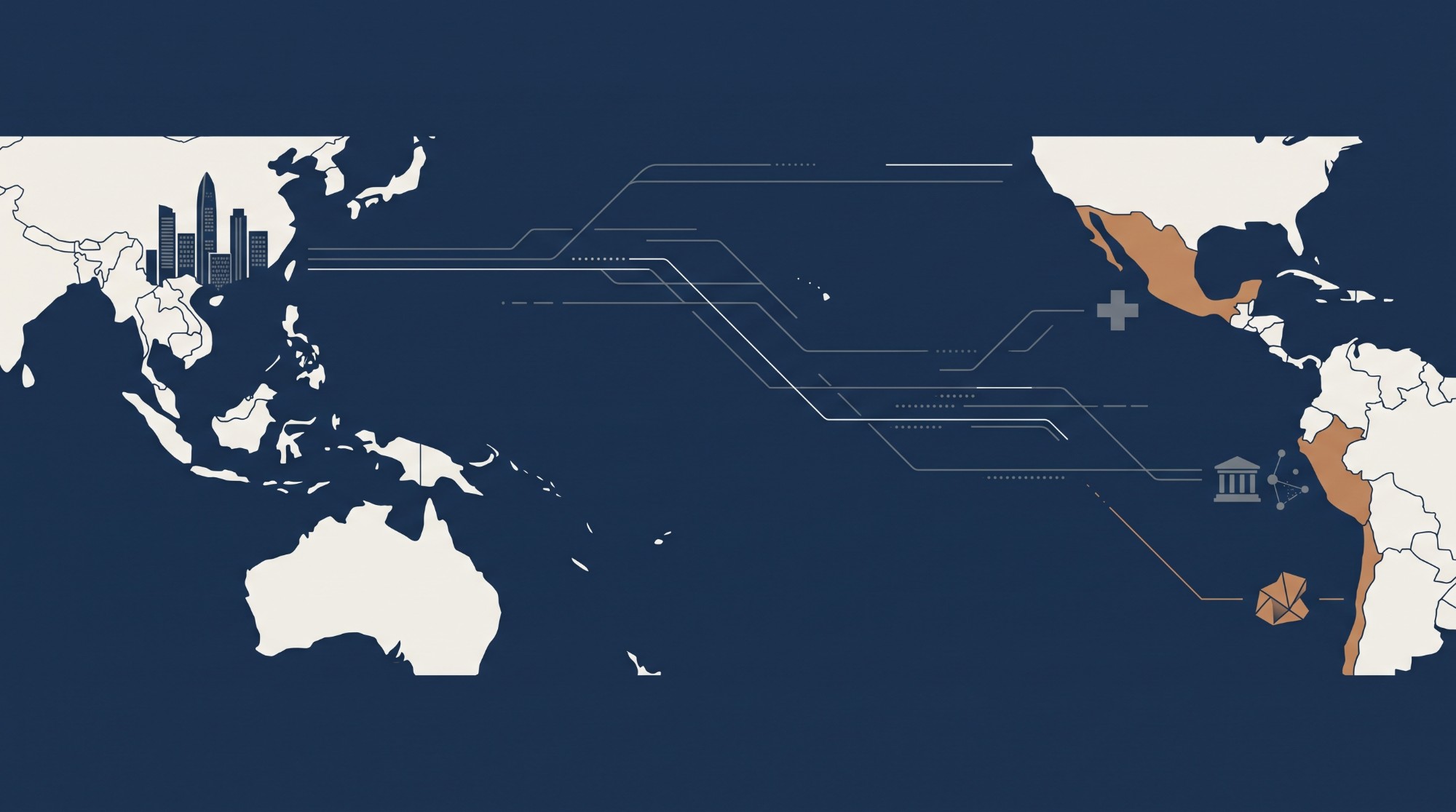
On November 19, 2026, in Shenzhen (China), the 21 leaders of the Asia-Pacific Economic Cooperation forum (APEC) adopted by consensus the “2026 APEC Leaders' Shenzhen Outlook — Building an Asia-Pacific Community to Prosper Together.” According to the text published by the Chinese Foreign Ministry, the document has 23 paragraphs and recalls that APEC is guided by its “voluntary, non-binding and consensus-building principles.” It is accompanied by three outcome documents: the APEC Trade Digitalization Cooperation Framework (2027–2030), the APEC Connectivity Blueprint (2026–2035) and the APEC Statement on Harnessing Digital and Emerging Technologies for Employment and Prosperity in the Asia-Pacific Region.
What the text says about artificial intelligence
The Outlook commends APEC's efforts to advance discussions on digital and emerging technologies, among them the APEC AI Initiative (2026–2030), and endorses the statement on employment. On those technologies, it speaks of “human-centric innovation” and “responsible approaches.” It also proposes using technology to improve public services and health, and giving micro, small and medium-sized enterprises (MSMEs) accessible digital tools. On work, it commits to lifelong learning, vocational training, reskilling and upskilling programs, and the protection of workers' rights.
On data, the leaders commit to cooperating to facilitate cross-border data flows while ensuring data protection and privacy, and to addressing data breaches, online scams and the deliberate misuse of digital and emerging technologies. The text names AI only twice—when citing the APEC AI Initiative and the Digital and AI ministerial meeting—and includes no commitments on AI safety, semiconductors or superintelligence.
The statement on employment is not binding either. Its main commitments are to expand digital literacy and training, to offer training in emerging technologies adapted to different starting levels, to use technology in employment services to match supply and demand, and to protect workers' rights.
China and the United States, in different registers
As host, Xi Jinping announced US$20 million for APEC practical cooperation, an Asia-Pacific Community Studies Center in Shenzhen and new cooperation mechanisms in digital technology, data flows, clean energy and SMEs. According to his official speech, the digital economy and AI are the engines of innovation-driven growth.
The United States arrived with a different vocabulary. According to the press, in the plenary session Donald Trump called AI superintelligence and said that Washington opposes globalist regulation. It is the same difference in vocabulary that AINI noted in September, when the White House announced a dialogue with China on “super intelligence” and the Chinese readout kept speaking of “AI.” At the time of writing, AINI had found no official readout, Chinese or American, of what Xi and Trump discussed on AI in Shenzhen.
Peru: AI as a public service
The president of Peru, Keiko Fujimori, focused her remarks in the plenary session on MSMEs and on the El Niño phenomenon. She said that the task is to ensure that the benefits of open trade reach small and medium-sized enterprises, including those that still operate in the informal economy. In the sources AINI reviewed, AI does not appear in that speech.
AI did appear during her visit to the Longgang Government Service and Administration Command Center in Shenzhen, where she said that, like her hosts, Peru wants technology and artificial intelligence to make citizens' lives easier. There she announced that China will contribute US$22 million to build in Peru a smart monitoring center against crime, inspired by that model. The Government has not reported the project's timeline, supplier or data governance framework, and AINI found no signed official document about it.
Peru approaches this project with the most developed framework of the three countries: Law No. 31814 has had Regulations in force since January 2026, and the National Artificial Intelligence Strategy 2026–2030, approved by Ministerial Resolution No. 152-2026-PCM, requires every public entity to have an AI action plan and an AI officer.
Chile: AI as a lever for production
The president of Chile, José Antonio Kast, linked AI to the country's natural resources. He said that artificial intelligence, digitalization and new energy sources are changing the way people produce, work and trade, that Chile does not want to watch that change from the outside but to lead it, and that it has the copper and lithium the world needs. He also said that AI will make it possible to modernize mining, agriculture, water management and logistics.
At their bilateral meeting on November 17, according to the Chinese Foreign Ministry, Xi proposed broadening cooperation in emerging areas such as artificial intelligence (AI), polar scientific research and deep-sea exploration. The two governments signed a roadmap for economic and trade cooperation and a memorandum of understanding in support of free trade and multilateralism. According to the Chilean Foreign Ministry, the roadmap includes the digital economy and AI; its text has not been published. According to Chilean media, Kast called for clear rules for AI and quantum computing that do not hold back their development.
Chile has no AI law. The bill inherited from the previous government was approved in general by the Senate's Future Challenges Committee on October 26, 2026, and the Kast government announced a more flexible substitute amendment that has not yet been submitted.
Mexico: AI and inequality
The president of Mexico, Claudia Sheinbaum, approached AI from the angle of inequality. She said that humanity is living through a decisive moment, that scientific and technological transformations, including artificial intelligence, open up enormous possibilities, but that deep inequalities persist. She added that development must be measured, even in the face of artificial intelligence, above all by its effect on people's lives.
In her bilateral meeting with Xi, according to CGTN, Sheinbaum said that Mexico is ready to expand cooperation with China in trade, investment, science and technology, manufacturing and AI. No signed agreements on AI were reported. After visiting the Nanshan People's Hospital, which uses AI for diagnosis, she said that her delegation had seen how artificial intelligence is used in health.
Mexico has no federal AI law. It has a National Artificial Intelligence Plan, published in April 2026 by the Digital Transformation and Telecommunications Agency, which is not binding. None of the bills introduced in Congress has been put to a floor vote.
AINI's view
For AINI, Shenzhen sets a direction, not a regulation. Governments agreed on general principles (skills, data with privacy, MSMEs). The practical detail (data standards, regulatory sandboxes, adoption by small firms) was left to private-sector recommendations, such as those of the APEC Business Advisory Council (ABAC) and the CEO Summit's Shenzhen Initiative, which bind no government. Rules are still being debated in each country, and Peru, Chile and Mexico arrive with uneven frameworks: a law with regulations, a bill in the Senate and a plan without a law.
The institute identifies a concrete risk. Technology that arrives through bilateral cooperation, such as the AI monitoring center announced for Peru, can get ahead of public information on who supplies it, what data it processes and who oversees it. Peru's framework already sets obligations for algorithmic transparency and human oversight. What remains to be seen is how they will apply to this project.
There is also a window. The Outlook confirms Mexico as APEC host in 2028, Chile in 2032 and Peru in 2034. It remains unknown whether the three will bring their own AI agenda to the forum, for example on mining, water, public health or informality, and what the texts that are not yet public say: the Chile–China roadmap and the agreement for the Peruvian monitoring center.
Would your organization like to join AINI?
We work with companies, governments, universities and civil society organizations across Latin America and the Caribbean. Let's talk about membership, education partnerships or sponsoring CIAL 2027, in Lima in April 2027.
Become a partner